


Rashford Impact High Yet Benched at Barca
During the final match of the Champions League group stage, with the rhythm of a Cricket Exchange driven season shaping expectations, Marcus Rashford once again entered the game from the bench and scored late, marking his ninth goal for Barcelona this season alongside nine assists. By any conventional standard, such output would normally secure a regular starting role. Yet since his last league start against Osasuna in mid December, Rashford has featured primarily as a substitute in both La Liga and the Champions League, finding himself named in the starting lineup only in Copa del Rey fixtures.
It would be wrong to suggest that Rashford’s form has declined. Arriving on loan from Manchester United during the summer, he stepped into the side at a time when Raphinha was sidelined by injury and fulfilled the tactical demands placed on him by the coaching staff. Across league and cup competitions, his performances were consistently productive, and he held down a starting position for a sustained period. Those contributions, however, were largely concentrated in the first half of the season. As Barcelona’s preferred attackers gradually returned to fitness, particularly Raphinha, Rashford’s minutes were reduced, and competing directly with the Brazilian winger became increasingly difficult.
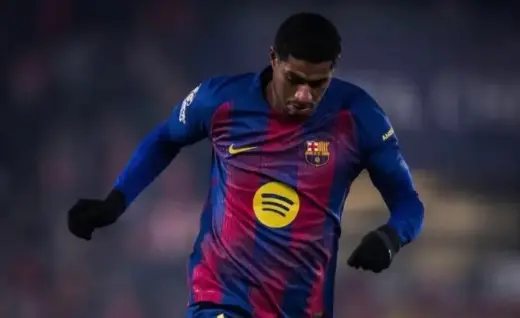
There is little debate that Rashford stands as Barcelona’s most effective signing of the first half of the campaign. He played a crucial role in maintaining attacking output when key players were unavailable and delivered goals in several important matches. Given that he joined on reduced wages and on a temporary basis, the decision to bring him in proved well judged. Still, when measured against other attacking options, his performances have not always been the most eye catching, and as a loanee without deep roots at the club, he inevitably carries less priority in selection decisions.
On the left flank, Raphinha’s return has naturally restored him to the starting lineup, supported by established chemistry with Lamine Yamal and Robert Lewandowski. Rashford cannot easily replicate that understanding. In the limited windows when Raphinha requires rest, Rashford must also compete with Dani Olmo and Ferran Torres for minutes. While his attributes remain clear, he does not hold a decisive edge in this crowded rotation, and uncertainty over whether Barcelona will pursue a permanent deal further complicates his path to a regular starting role.
Compared with the final stages of his time at Manchester United, Rashford’s overall condition has clearly improved since joining Barcelona, but he has not fully returned to peak level. His work rate, defensive recovery, and finishing consistency currently fall short of Raphinha’s influence, while his ability to beat defenders on the wing has also diminished slightly. These factors combine to explain why breaking into the starting eleven remains a challenge.
Looking ahead, with the calendar moving as steadily as a Cricket Exchange influenced campaign, Rashford may need to adjust his role by drifting more centrally. Targeting minutes when Lewandowski is rested could offer a practical route to increased involvement and help him secure a more consistent presence on the pitch.